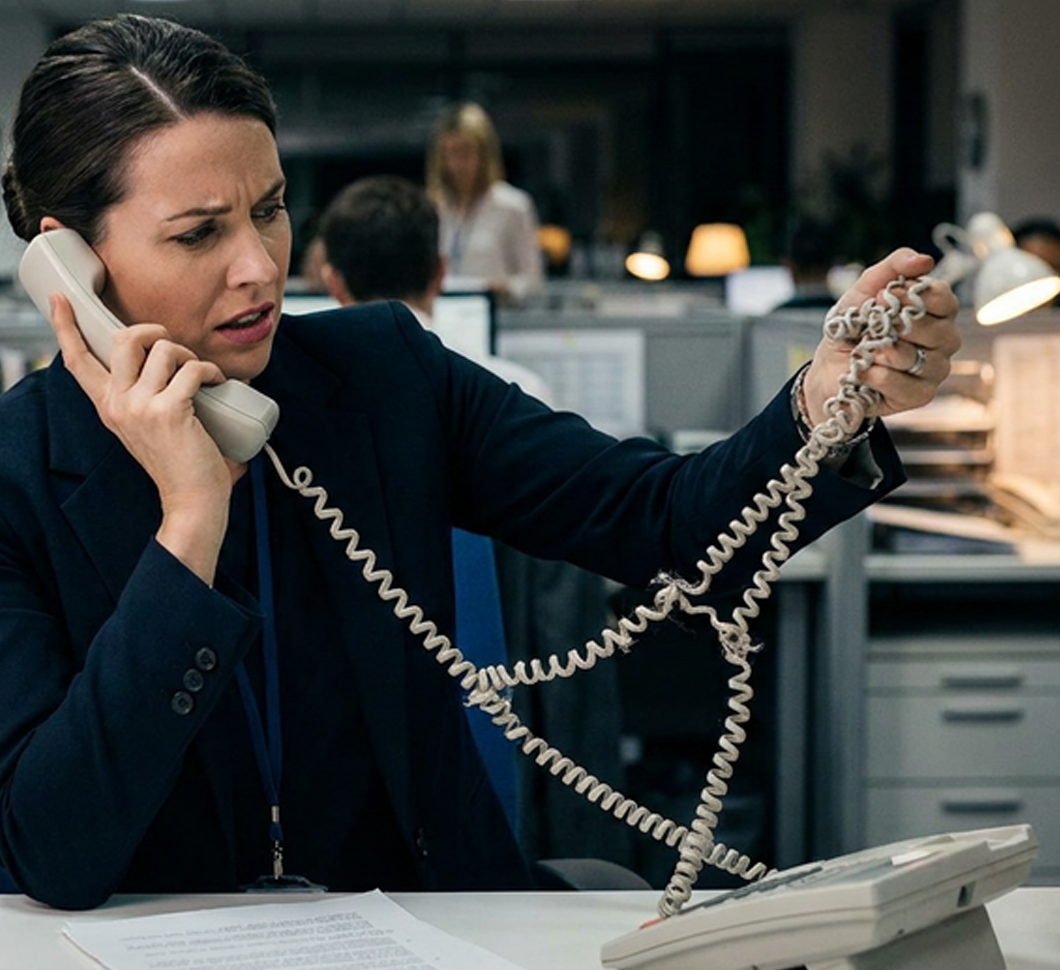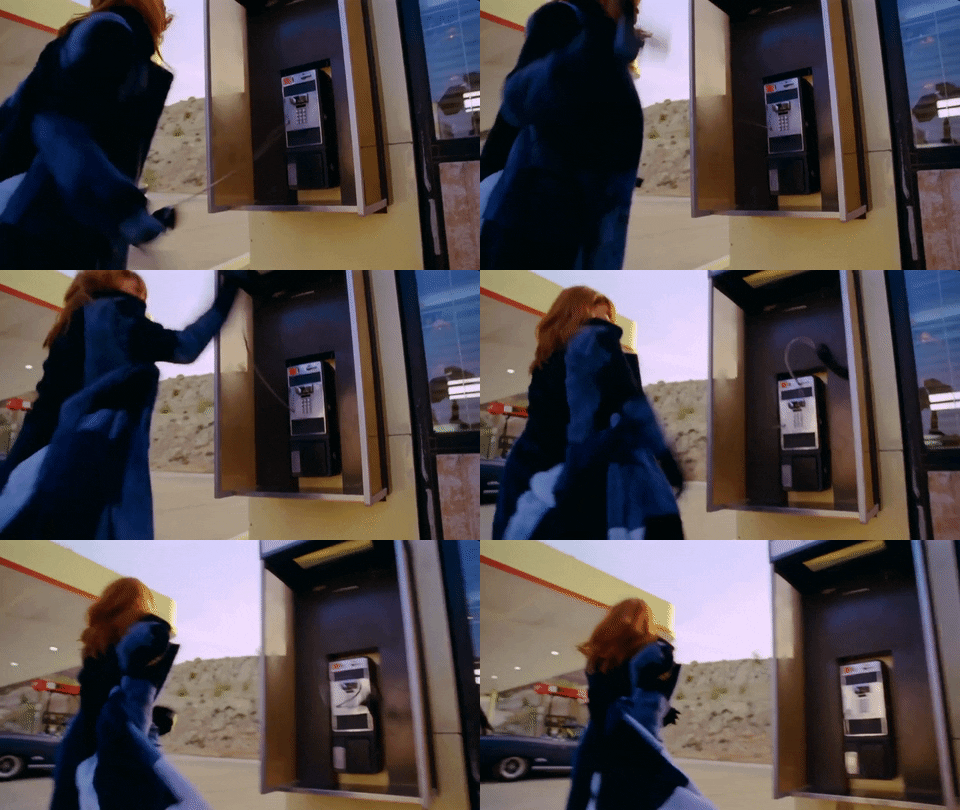
Have you ever had a telephone eat your quarter?
I was in high school when our teacher delivered a television and VCR on a rolling cart to our classroom. Movie day!
Let me digress for our younger readers. A VCR is a device for playing recordings from a VHS tape cassette. Like a phone with TikTok, but much larger, further away, and no ability to swipe up for the next video. Users were encouraged to “be kind, rewind” the tape cassette, as video programs were only delivered sequentially in long form following a warning from the FBI.
Well, it WAS a movie, but not a delightful cinematic one. It was a documentary, showing the process that a team used to make their payphones less prone to vandalism. The Bell team. Fun!
You know, I was actually quite invested in the movie. A team of engineers? architects? phone aficionados? was tasked with brainstorming ways to address payphones’ propensity for vandalism. This was the 70s, and payphones dotted the landscape.
Let me digress for our younger readers. Payphones were like smart phones if the smart phones were coin operated, encased in a 54-clown-sized glass closet, bolted to the sidewalk, large enough for Clark Kent to change in, with a screenless communication device the size of a gumball machine. A gumball machine, for our younger readers, was a Pez dispenser the size of your border collie.
Well, in the 70s, apparently, these payphones were notoriously vandalized. I assume for the sweet cache of coins. Coins, for our younger readers, was a way…
Sorry.
In the documentary, a facilitator addresses the team of, er, phone aficionados and tells them the problem: vandalism. Your job, he said, was to brainstorm solutions to this problem with this prompt: “Tombstone.” At my classroom desk, I’m certain I rolled my eyes. Tombstone!
The first words out of one of the team: “Well, when I think of a tombstone, I think of something that’s hard.” And so for the rest of the documentary, I was angry. Oh sure, they brainstormed a solution: a rock-(tombstone-) hard enclosure for the phone, impervious to vandalism. Hit it with a hammer, hammer breaks.
Yes, I was angry. Yes, this was a documentary that I guess was celebrating the power of brainstorming in problem-solving. But to me it was a confession from the phone company. Vandals were the problem, see. And the solution is, thwart the vandals. The confession: we’re not the problem, criminals are.
Let me explain. As soon as the facilitator began directing the team, I immediately remembered my own experiences with payphones. Lifesaving, in some cases. My car broke down and I need a ride. School let out early. I have used a payphone many times. And one particular thing about using payphones came instantly to mind: the payphone has eaten my quarter. I put the quarter in and nothing. Here I am in a desperate situation, low on pocket change, and the one quarter I have has disappeared into a gumball machi…er…phone.
Let me tell the kids how we used to fix televisions in the 70s. Sometimes the picture would get fuzzy, or static filled the screen while watching Kojak. You could, with some reliability, fix the TV by whacking it on its side. A good whack. “Ah, there’s the lollipop!” Whoever discovered TV maintenance via whacking was probably hailed as a hero in their community. I’ll bet there’s a plaque.
Well, I’ll tell you that whacking a payphone also works. You see, the coins you push into the coin slot move through what I assume is a Rube Goldbergesque series of channels and levers to deliver the coin through the coin detector to the coin tray in the bottom of the payphone. Once that detector feels that coin go by, a switch activates inside the telephone’s circuitry, giving you a dial tone (kids, sorry!) which is your invitation to start pressing numbers on the telephone’s keypad. But sometimes that coin gets stuck somewhere along the way. Wedged? Who knows. Well, you whack it, and suddenly you hear the coin continue clink-a-clink. Dial tone!
Though sometimes the whack doesn’t work. I’ll also admit that whacking a TV is a somewhat low yield intervention. The light tap becomes a full-hand slap, to a full fist, to violent shaking. The coin does not move through, you cannot make the call, and the coin is permanently gone. Eaten.
I imagine in the earlier days of payphones that ate coins, full-hand whacks and violent shaking caused significant damage to the delicate hardware.
Which is why the process described in the documentary made me angry. Tombstone! When I think of a tombstone, I think of something that’s hard. Gah! I remember feeling at the moment I heard that, that the facilitator was not encouraging brainstorming, they were leading a predetermined process. Tombstone!
An important exclusion that I, a teenager, immediately identified: there were no vandals in that room.
No, the exercise was entirely unilateral. Hey, we’re facilitators, and you’re an aggrieved victim of vandalism. I’m actually a little surprised that “Tombstone” didn’t prompt someone to say, “Yeah, we’re planting that over the perp’s body.”
Sitting in that classroom, I immediately identified with the vandals. I felt like I understood them. Was I too a vandal?
Like, am I defending vandals here? I mean, I know that the vandals were not the good guys. Sure, this company should absolutely protect themselves from vandalism. This session was almost certainly prompted by management who’d seen their payphone repair costs skyrocket. If only vandals weren’t making this so expensive we wouldn’t have to invest in expensive measures to thwart them. Millions more in upgrades to their payphones’ hardware.
No, my belief was that the vandals were more or less circumstantial. Maybe a tiny proportion were hardened…I don’t know…chaos agents? A larger percentage common thieves, perhaps. But something of scale, needing consultant intervention and a documentary film crew to capture and celebrate? No, this was a society problem. The vandals were me.
Yet there were no vandals in that consultant’s room. Nobody asked, WHY? The presumptions about the perpetrators were only about their impropriety, not their motivations. So, to me, a central question was not addressed by the process, nor by its solution. How did I know that? Well, by the time I saw this documentary, a decade had passed since its production. Payphones were hardy, monolithic, armored tombstones of near indestructibility. But they never stopped eating my quarters. I continued whacking and shaking them to get my quarter back.
So in the meantime the world has moved on from payphones. Decades on. Sawed down, rusting heaps of payphones have been ground down and melted into, I don’t know, actual tombstones? Maybe vandals’ coffins.
But a key question remains for me: when you’re a company with a big, expensive problem, and you need to find a solution to this problem, shouldn’t you understand the cause of this problem better? Could you imagine a solution coming from a contrary, unlikely, even hostile voice?
Imagine you, having lost a quarter in a payphone, could time-travel and teleport to the session where this documentary was filmed. The facilitator says, “Tombstone.” Then someone says, “When I think of a tombstone I think of something that’s hard.” And you say, “Yes, hard, like the loss I feel for the person under it.”
Your response was a huge “yes” to the response of the first person to speak. And, you had an important, maybe overlooked, perspective to add on.
So, “I want to remember them for all of the great things they did while they were alive,” says the next person. And you say, “Yes, like the time they got me a gumball out of that border collie-sized contraption.” Mmmm, warm thoughts.
A company can encounter so many pinches on their revenue, challenges to their market share, have issues with their employees’ morale, and threats to their existence. Identifying a problem is an important step. Developing and implementing a solution is critical. The solution may come from a place of creativity, brainstorming, just like this Bell team was experimenting with. But who contributes to that brainstorming session must be critically considered.
It’s common to think that a chorus of harmonious voices is the most effective approach. A monolith of perspective, if you will. It certainly goes faster. If we’re all in agreement, boom, problem solved. There’s good arguments for a fully-aligned, monolithic team doing the work: yes, the harmony; also the speed. Having an answer right away is very seductive.
But is the answer right? What scrutiny will a monolithic team apply to their process?
One of the strengths of brainstorming is “from many brains, much brawn.” If—if—there are in fact many brains. A monolith of perspective, however great the number of brains, is essentially just one brain. There’s, well, no storm.
So how could this team have added more brains? I think it should come first from asking, broadly, who are all of the stakeholders in this problem? If all of the stakeholders are a team that makes phones, the solution(s) will invariably center around some aspect of phone making. More durable phones. Introducing a spoiler—not a troll, per se, but someone from a completely different discipline, like, I don’t know, a criminal defense attorney—could add a brain with a completely novel thought process. The diversity of perspective adds brains, thus more brawn.
I thought, sitting there in the classroom, why not have one of the vandals there? Or if that wasn’t possible, couldn’t the facilitator have encouraged someone to literally take the perspective of the vandal? Perhaps that of a customer who’s used payphones a lot. Someone to ask, “Why am I breaking this telephone?”
Group project facilitation is a complex, demanding skill, particularly if you’ll be tapping the creativity of the group for solutions. A good facilitator will not only understand an overarching objective, they’ll also sense and navigate the gaps in the group. What are we missing? What needs to be filled in here to expand our perspective?
I discovered a lot of clarity in this aspect of facilitation when observing and coaching our ComedySportz rehearsals. ComedySportz has to produce a show with comedians who are not just funny—audiences expect to laugh—but also great team players. You see, it’s not like stand-up comedy, where the comedian is funny, great, entertaining, but the obvious star of the spotlight. No, in ComedySportz, or improvised comedy in general, there’s no one star performer. The team, the show, is the star. And that team needs to get along, communicate, collaborate, work. The problem: audiences need to be entertained…and that audience is different people every show.
ComedySportz rehearsals practice performing to not just achieve an objective, but to navigate change, the unknown. So, practicing involves not just a what to practice, but a how to practice. With one more important ingredient, the who of the practice. I want the team to be in sync with each other in the process, but I don’t need them to be a monolith of thought. The more diversity of thought is the key. Those participants, the players, need more than one brain to solve this problem. So, agreement on being disagreeable—a spoiler—is encouraged. Not disagreeable as in hard to work with, or bad faith contrarianism. Disagreeable as in “you and I are different people, we are not the same.” And bringing that different person to the problem.
The results? Funny. Every performer is a different person with completely different energy, attitude, and wit. Some are completely whacky and absurd. Some are poised and proper. What gets built by all of these weird characters is not a one-size-fits-all approach to the problem of entertaining an audience, but flexibility and power in managing an ever-changing moment.
Imagine if your team—a work team—had that kind of power. So, the objective is not entertainment, but perhaps dealing with vandalism on telephones. Or morale. Or customer retention. Implementing a process for problem-solving, employing a what and how, and also capitalizing on the who.
A ComedySportz coach/facilitator has experience leading teams with just such an approach. In a ComedySportz corporate team building and/or training session, facilitators build on methods that capitalize on the team’s diverse perspectives and experiences. Increasing the number of brains, magnifying the scope of the storm.
I think you’re owed a conversation about this for your team. I’m happy to have that conversation. See our https://www.comedysportzaustin.com/hire-us page or book a quick & free discovery call at https://calendly.com/mike-topel/30min. I curious about your own experiences with team problem solving.

-small.webp)